
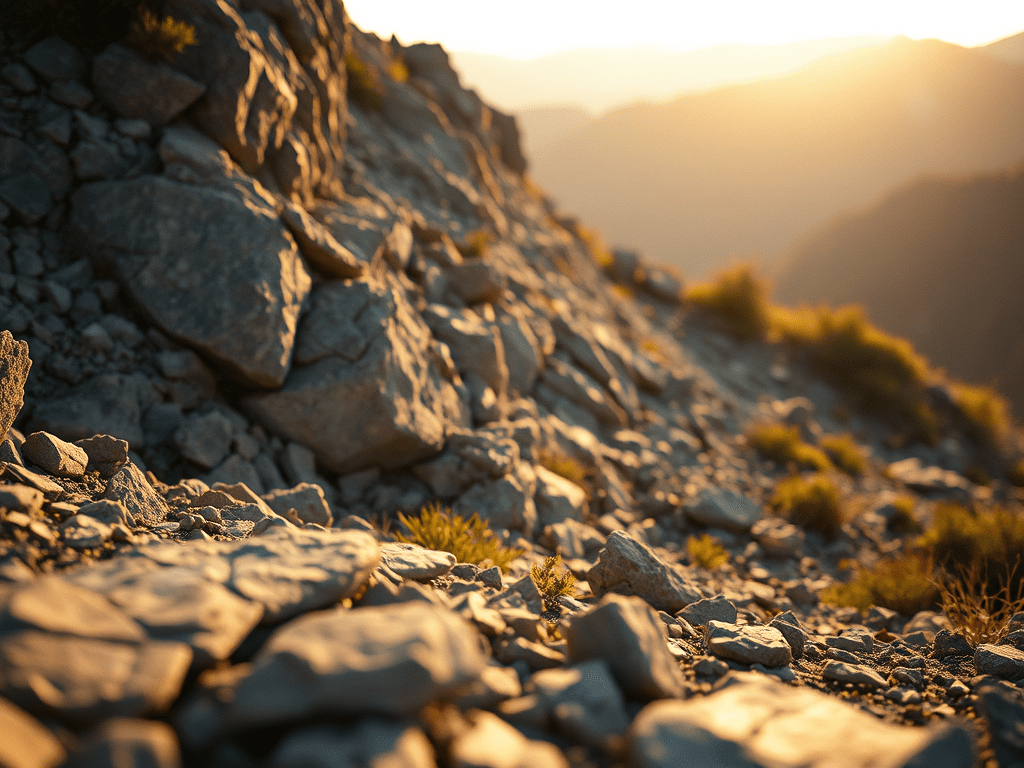
The Czech Science Foundation awarded the Institute of Rock Structure and Mechanics of the Czech Academy of Sciences (PI: Jan Blahůt) and our Geohazards Group (co-PI: Gianvito Scaringi) with 310 000 EUR to “Explain the patterns and trends of rock slope instability in temperate climates with thermal forcing“. The project, running until the end of 2027, funds experimental research, field monitoring, and modelling, supporting the joint effort of ten researchers, including four doctoral students.
We expect to quantify, at multiple spatial scales, the response of rocks and rock masses to changes in temperature that can be foreseen in light of the ongoing climate change. This is the first time that an integrated approach joining monitoring, laboratory testing, and modelling will be applied to rock slopes in a temperate climate.
Rocks slopes are subjected to diurnal, seasonal and long-term temperature fluctuations, which result in a certain rate of rock wear, weathering, and instability phenomena. Changes in climate patterns enhance temperature fluctuations, with an impact on geomechanical properties which, in turn, control the stability of rock slopes. Most research on the effect of temperature on rock slope stability concerns high-mountain and permafrost areas, while few studies concentrate on medium latitudes. We propose an integrated approach to evaluate and account for temperature effects in laboratory tests, long-term monitoring of rock masses, field experiments, and advanced data-driven spatio-temporal modelling. By uncovering knowledge of thermomechanical rock behaviour and its larger scale implications, we will contribute to improving landslide hazard assessments, ultimately supporting climate change adaptation.
 The Geohazards Group