

The Geohazards Group, represented by Gianvito Scaringi, Marco Loche, Jan Jerman, Sumit Das, Manh Nguyen, and Phuong Do, once again left a mark at the European Geosciences Union General Assembly 2025 (EGU25) in Vienna.
This year’s event saw the team actively shaping discussions and presenting pioneering research to a global audience of geoscience experts. Scaringi and Das spearheaded the dialogue as conveners and chairs of the Climate Change Effects on Landslides (NH3.4) and Fluvial Geomorphology (GM10.1) sessions, showing critical conversations on risk mitigation and landscape dynamics.
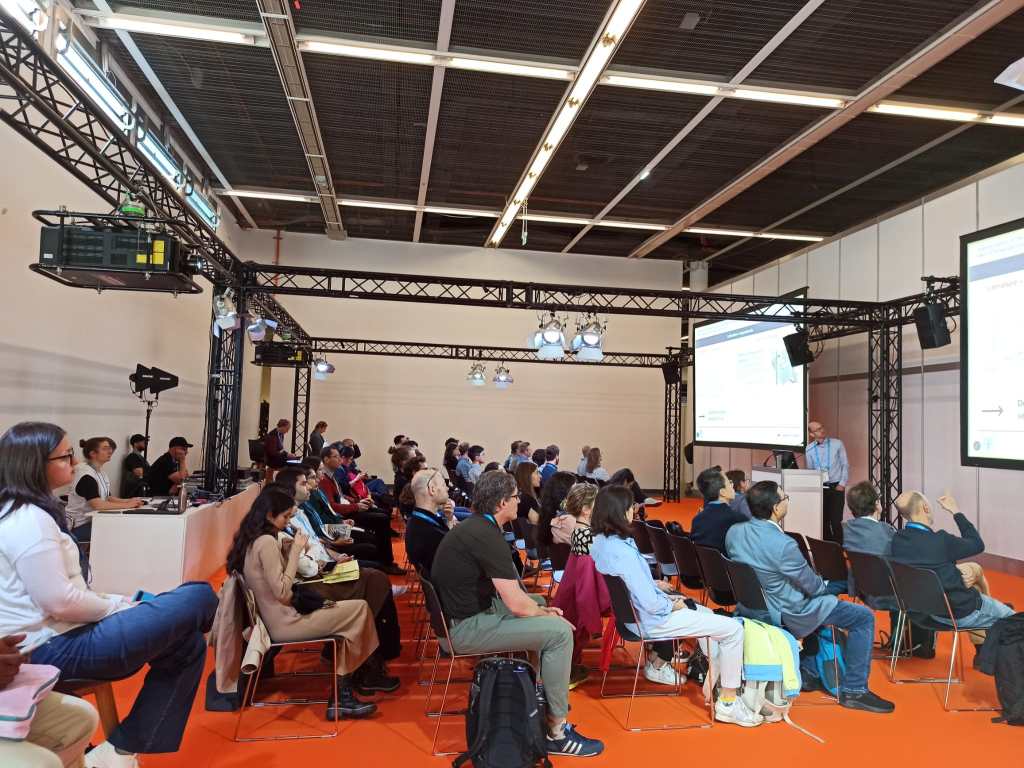
The group showcased their latest findings through three PICO presentations, a scientific poster, and several talks, all of which drew enthusiastic engagement. Marco Loche presented an application of multi-temporal infrared thermography to evaluate physical properties of rock materials from laboratory and in-situ cooling rates (link). Manh Nguyen discussed lab-scale experimental results on thermal influences in soil compression and creep behavior (link). Jan Jerman delivered two talks: on slope stability analysis considering the effect of temperature on the shear strength (link), and on the characterisation of thermal properties of soil for energy geotechnics applications (link). Phuong Do introduced a neural network-based calibration tool for advanced constitutive models of geomaterials (link). Finally, Sumit Das’s poster, exploring how tectonic, lithologic, and climatic factors govern landslide patterns in the Himalayas, sparked lively debates on sustainable hazard management strategies (link).
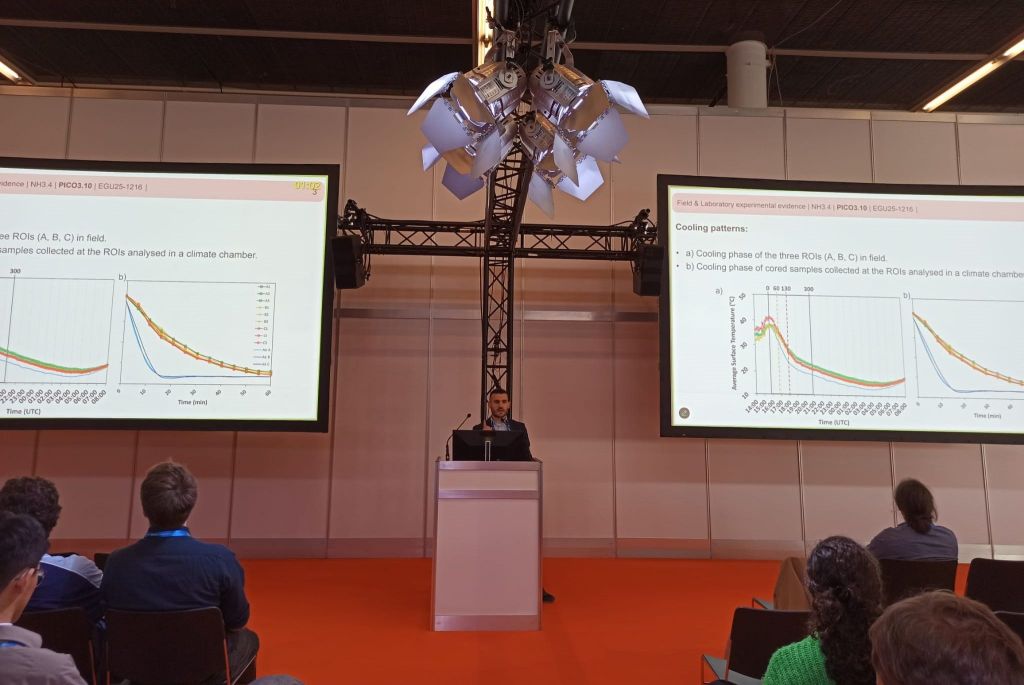
The EGU General Assembly, once again, proved to be a hub for global collaboration, with the team connecting with peers to exchange ideas and explore future projects. The significant interest in their work highlights the growing relevance of their research in addressing pressing geohazard challenges worldwide.
 The Geohazards Group