From experimental insights to advanced modelling, the Geohazards Group has got you covered.
Let’s review our results in 2025 so far.
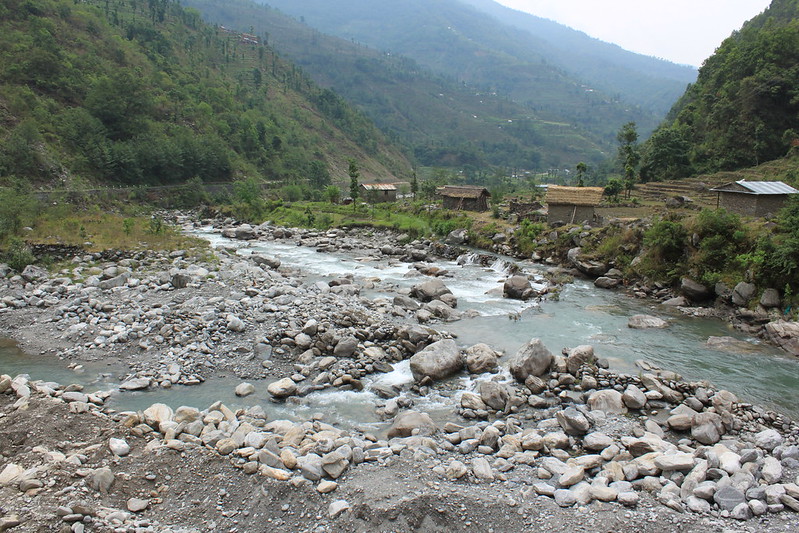
This July, Om Dhakal’s latest laboratory research was published in the Bulletin of Engineering Geology and the Environment, the official journal of the IAEG, published by Springer Nature. Thanks to a collaboration with Ranjan Dahal and the Central Department of Geology in Nepal, Om received landslide soil samples from the Melamchi River catchment—an area devastated by a cascade of geohazards in 2021, including glacial lake outbursts, numerous landslides, debris flows, and a catastrophic flood. The disaster claimed 25 lives, destroyed hundreds of homes, and severely damaged a critical water supply project intended to serve Nepal’s capital, Kathmandu. Om’s research focused on analyzing the thermal sensitivity of landslide soil to assess whether climate-driven warming may have contributed to the catastrophe.
[Find out more about the article here]
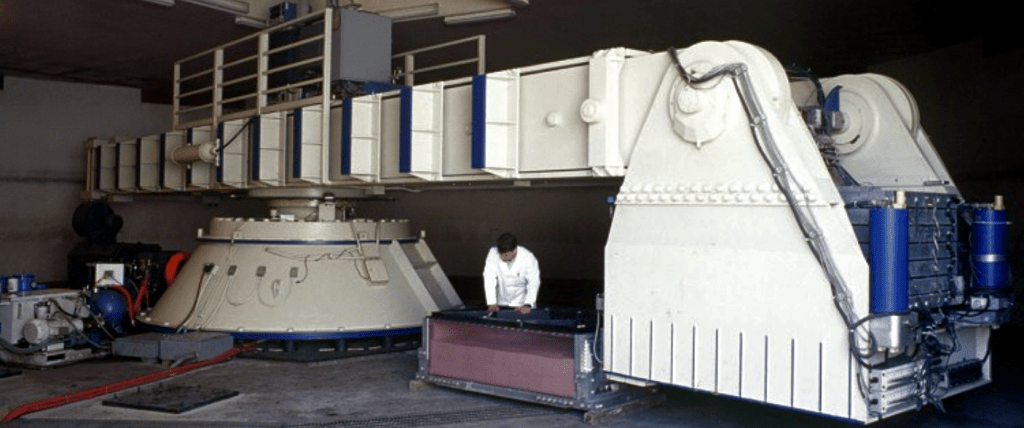
In April, Gianvito Scaringi’s collaboration with researchers from the Chinese Academy of Geological Sciences of Beijing and the University of Natural Resources and Life Sciences in Vienna resulted in a special experimental study to understand roto-translational landslides in stiff-clays: centrifuge modelling! Geotechnical centrifuges simulate real-world gravitational forces by spinning scaled-down models of soil slopes or geotechnical structures at high speeds, generating centrifugal acceleration that replicates full-scale stress conditions. This approach enables researchers to investigate complex phenomena such as slope stability, significantly accelerating data collection and yielding valuable insights in a shortened timeframe. The article was published in Engineering Geology, Elsevier’s top journal in this subject with an impact factor of 8.4.
[Find out more about the article here]
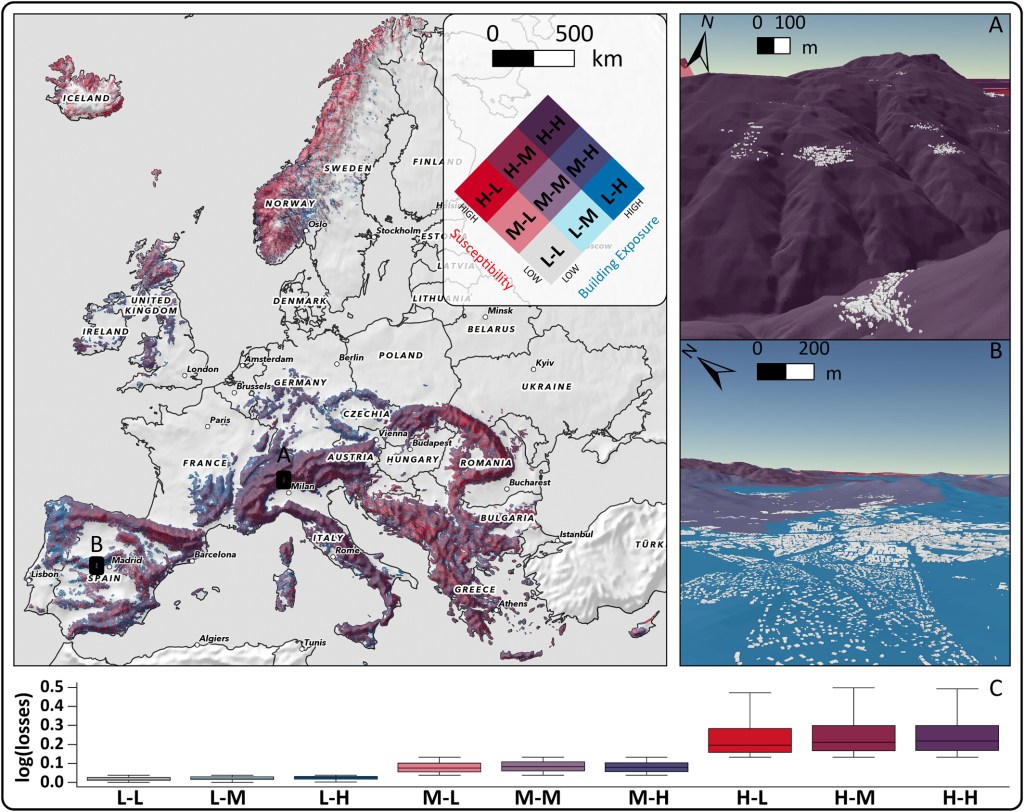
Marco Loche participated in a collaborative review on landslide risk assessment in Europe. The work critically analysed each component in the landslide risk analysis (susceptibility, hazard, exposure and vulnerability) to offer a detailed explanation of their state-of-the-art. A textbook example was also provided in the form of a case study at the continental scale, focusing on the main European mountain ranges. The work, led by Florence-based Francesco Caleca, was coauthored by many top researchers from around Europe, including UTwente-based Luigi Lombardo, Hakan Tanyas and Ashok Dahal, and Stefan Steger from GeoSphere Austria. Leaders of the International Consortium on Landslides Nicola Casagli and Veronica Tofani also took part in the study. The article Pan-European Landslide RIsk Assessment: From Theory to Practice was published Open Access in Reviews of Geophysics, an invitation-only journal with an impact factor of 37.3.
[Find out more about the article here]
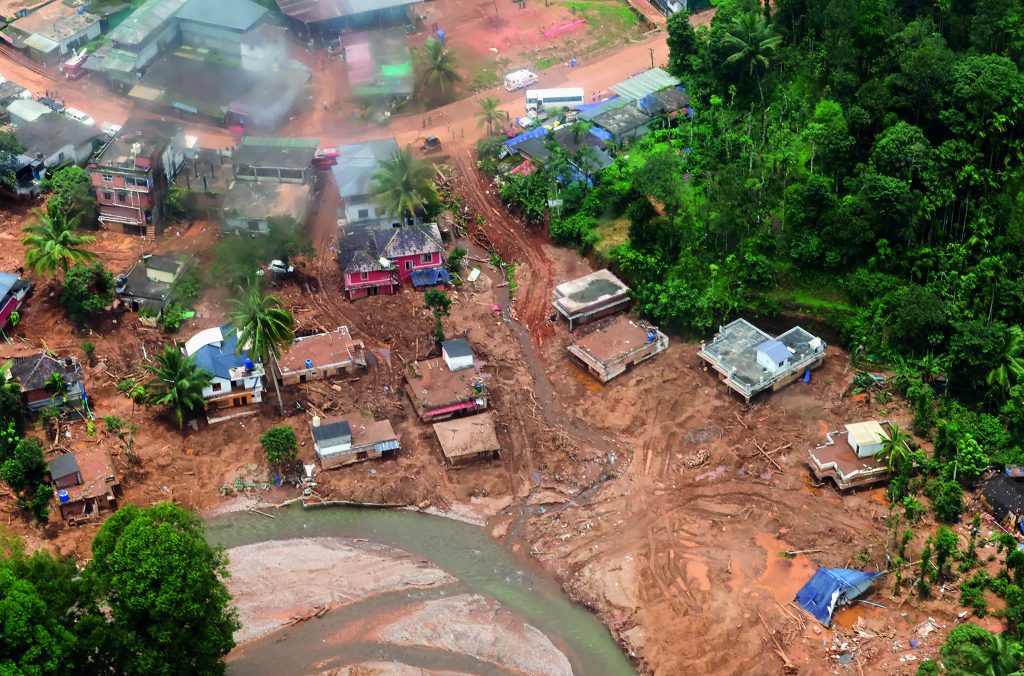
Another international collaboration of Gianvito Scaringi, this time with fellow colleagues from India, focused on a catastrophic debris flow that occurred in July 2024 in the Chaliyar River Valley (Wayanad, Kerala, India), claiming the lives of 252 people. The event, prompted by heavy rains, caused the mobilisation of almost 5 million cubic metres of sediments from the slopes into the river. Interestingly, this huge amount of sediments was removed so efficiently by the stream that its waters returned clear in less than 48 hours. The rapid evacuation of sediment loads by steep gradient rivers such as the Chaliyar clarifies the role of catastrophic landslide events in the evolution of mountain landscapes. A research letter stemming from this work was published in Environmental Research Communications.
[Find out more about the article here]
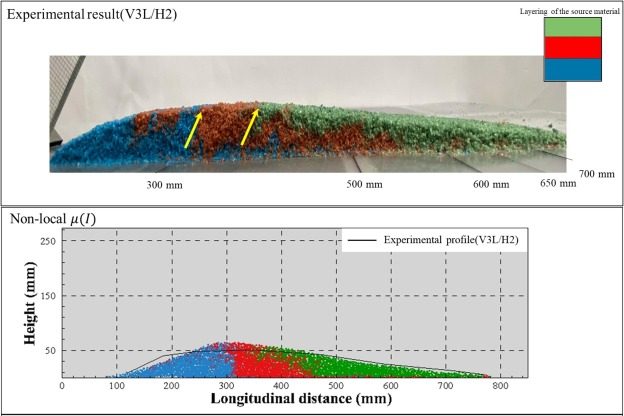
In February, an important article on the modelling of fast landslide runouts was published in Engineering Geology. The work was led by Chengdu-based Shuxi Zhao from the Key Laboratory of Mountain Hazard of the Chinese Academy of Sciences and coauthored by Gianvito Scaringi. The article proposes a viscoplastic non-local rheological model for landslide material based on the concept of inertial number. Once implemented into a numerical framework called the moving least squares material point method, this rheological model can improve the description of landslide runout and deposition significantly. This was demonstrated by performing computer simulations of granular flows which turned out to be very accurate in a variety of experimental conditions.
[Find out more about the article here]
That’s all for now, but many new results are coming soon. So, stay tuned and don’t forget to subscribe to our site!
 The Geohazards Group