
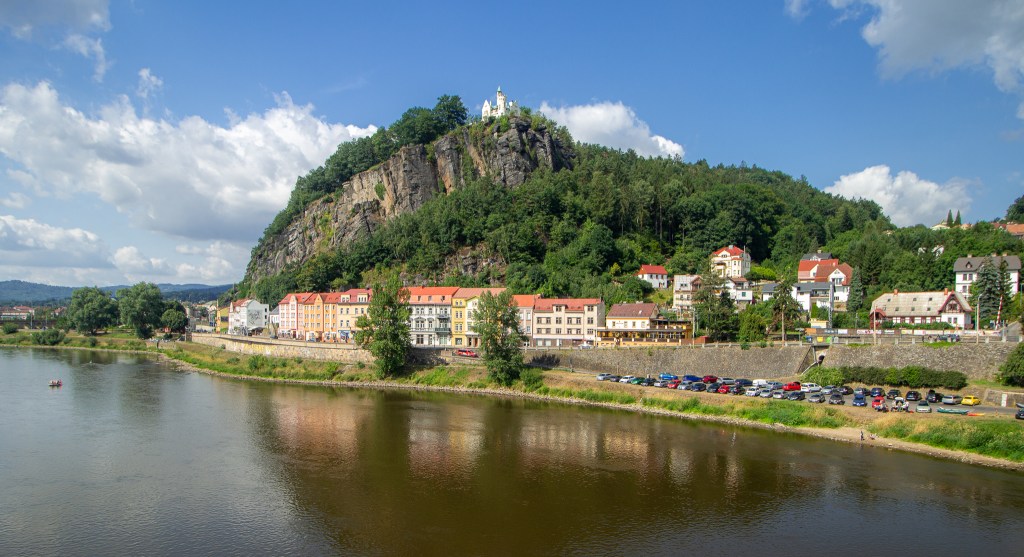
A new study shows that gradual atmospheric warming can weaken rock slopes over decades, creating risks that may have been previously underestimated. Published in Landslides, the research focuses on Pastýřská stěna, a sandstone cliff in Děčín, northwestern Czechia, revealing that even modest increases in temperature can slowly open cracks in the rock, potentially leading to rockfall or slope failure over time.
The team, led by Ondřej Racek from the Institute of Rock Structure and Mechanics of the Czech Academy of Sciences, combined long-term monitoring data with advanced modelling to understand how the cliff responds to rising temperatures. Since 2018, Racek and his colleagues have been tracking rock-mass temperatures, the movement of fractures, and local climate conditions. Feeding this information into a thermo-mechanical model, they were able to project how the cliff might behave under different future warming scenarios. The results were striking: even without heavy rainfall or extreme freeze-thaw cycles, slow warming alone can progressively and irreversibly open joints in the rock, causing surface blocks to shift by several centimeters over the coming decades.
“This study highlights that climate change affects more than just rainfall patterns or heat waves,” says Gianvito Scaringi, coauthor of the study. “Even slow, gradual warming can gradually weaken rock slopes, increasing the risk of rockfalls in areas that might otherwise be considered stable.” The findings are particularly relevant for sandstone cliffs and other jointed rock formations, where pre-existing fractures can amplify the effects of thermal stress over time.
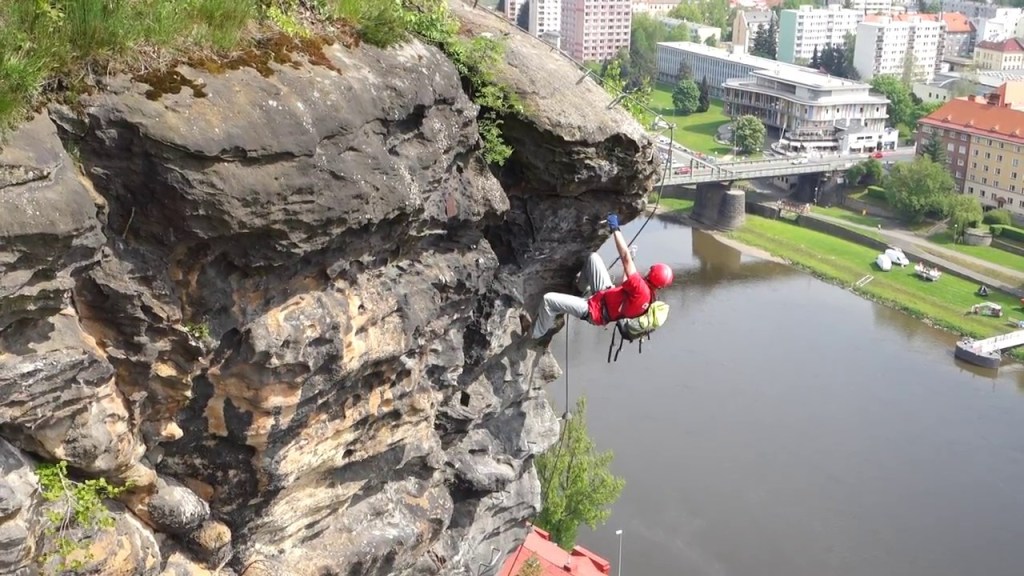
The research also carries important implications for public safety and infrastructure planning. Urban areas, roads, and recreational sites located near cliffs could face greater hazards than currently appreciated, and long-term monitoring and risk mitigation strategies may need to account for the cumulative impact of rising temperatures. By demonstrating that thermal fatigue can be a critical driver of slope instability, the study adds a new dimension to our understanding of climate-related geohazards.
Titled “Atmospheric warming drives shallow rock slope instability via irreversible joint opening”, the study is authored by Racek along with Andrea Morcioni, Jan Blahůt, Tiziana Apuani, Petr Štěpánek, and Gianvito Scaringi. Beyond its local focus, the work provides a framework for assessing long-term slope stability in other regions and rock types around the world. It emphasizes the importance of considering not just extreme events, but also slow, persistent changes in temperature when evaluating rockfall hazards in a warming climate.
Full article: https://link.springer.com/article/10.1007/s10346-025-02659-9
 The Geohazards Group