
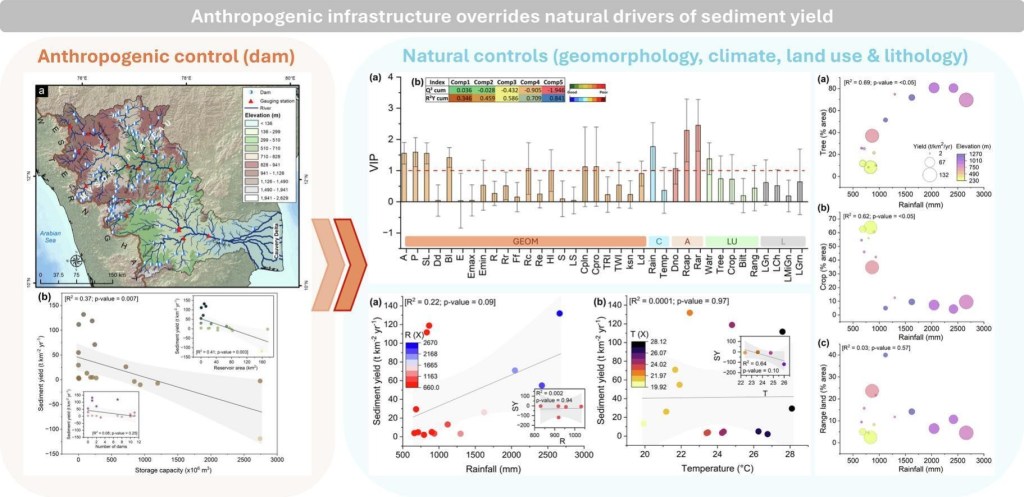
In rivers across the world, sediment yield—the amount of sand, dirt, and rock carried by water—is a big deal. It affects the longevity of reservoirs, the health of coastal deltas, and the survival of river ecosystems. In this study, we examined the Cauvery River basin in India to determine what factors control these sediment levels: is it natural or human activity?
We examined 36 different factors, ranging from rainfall and slope steepness to the number of dams and the land use. Here is what we found:
- Humans are in the driver’s seat: The single biggest factor controlling sediment is human infrastructure. Large reservoirs act like giant traps, catching sediment before it can move downstream. In this river basin, the size of reservoirs explained about 41% of the differences in sediment levels, showing that human construction now overrides many natural processes.
- Rainfall is the top natural force: Among natural factors, heavy rain is the primary reason sediment moves. However, the size of the river area also matters; interestingly, larger areas tended to have lower sediment yields because there is more space for the sediment to settle and get “stored” along the way rather than washing out.
- Trees can’t always stop erosion: While forests usually help keep soil in place, the study found that in very steep or extremely rainy areas, the sheer force of nature can override the protection provided by trees.
Why this matters
By understanding that dams are the dominant force, managers can better predict how reservoirs will fill up with mud and how to protect the environment downstream. This “map” for understanding sediment can be used for other major rivers around the world that have many dams.
Sumit Das, Soumi Talukdar, Gianvito Scaringi (2026). Science of the Total Environment. Full paper here.
 The Geohazards Group