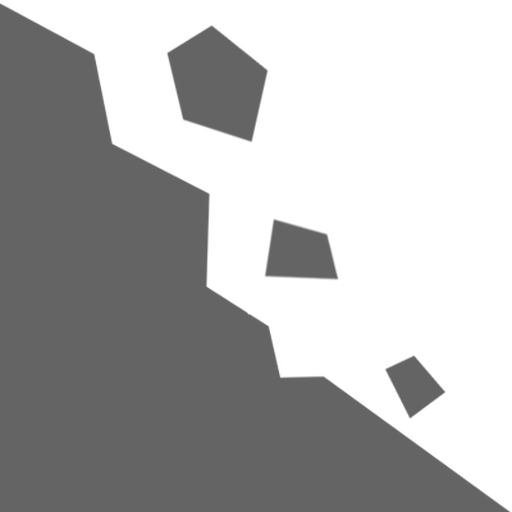
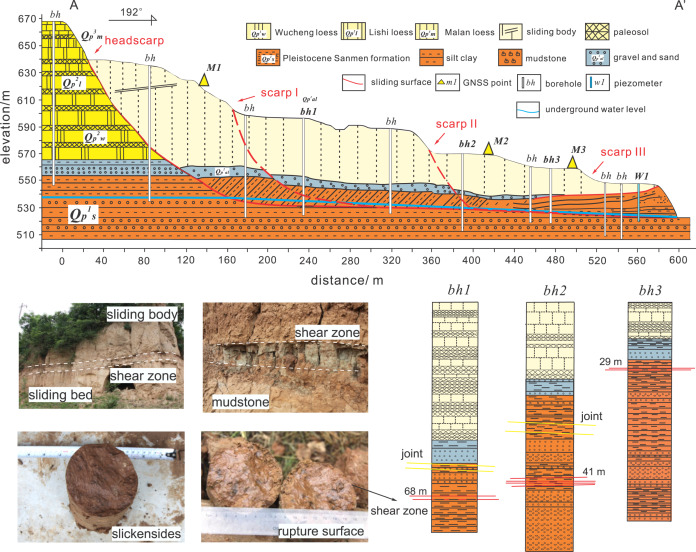
Roto-translational landslides usually exhibit creep deformation along sliding surfaces, showing transverse cracks on the ground surfaces. However, the scarcity of experimental data has significantly hindered a deep understanding of their failure mechanisms. This research probes into the rotational failure phenomena of landslides in stiff clay formations, utilizing geotechnical centrifuge modelling and laboratory creep tests. Our findings reveal that rotational failures in model slopes are exclusively triggered under conditions of an undrained boundary at the basal shear zone. The post-failure behaviour is characterized by a settlement at the slope crest and a pronounced bulge at the toe, resulting in complex rotational movements along the basal sliding surface. Moreover, our laboratory experiments illuminate the creep behaviour of shear-zone materials under undrained conditions. In particular, samples with a high initial water content under sustained loading are highly susceptible to a quick transition into tertiary creep, leading to accelerated failure. These experimental insights substantially advance our understanding of the rotational failure patterns observed in clay-based landslides.
Xin, Kang, Wu, Scaringi, Wang, Wu (2025), Engineering Geology.
The full text is available here.
 The Geohazards Group