
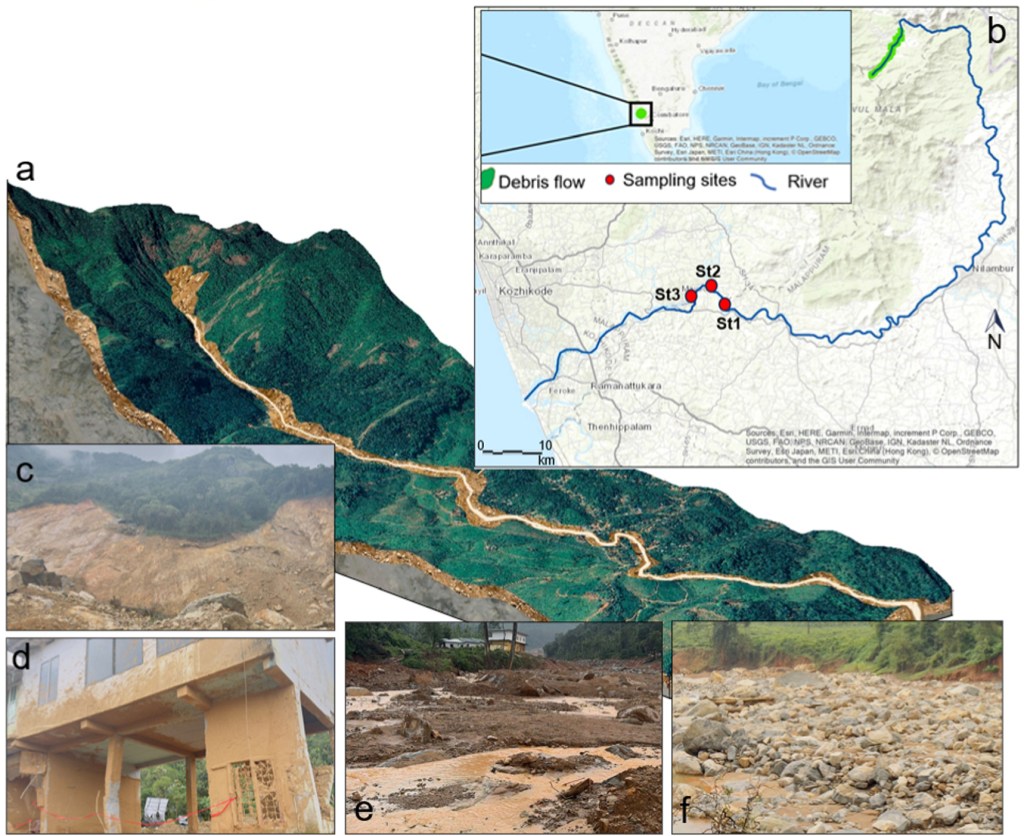
Mass wasting events, such as channelized debris flows, can result in heavy sediment fluxes in river systems. On July 30, 2024, a catastrophic debris flow in Wayanad, India, resulted in over 252 fatalities, and deposited approximately 5 million m3 of sediments into the Chaliyar River Valley. We measured sediment fluxes in Chaliyar before, during, and after the event through in situwater sample analysis. Suspended sediment concentrations during June and July 2024, prior to the debris flow, were highly variable, with peak values reaching 71.72 mg/l. On the day of the event, the debris flow perturbed the river channel, resulting in a rapid, 100-fold spike in the concentration of suspended sediment compared to June–July averages. Within 48 h post-event, the concentrations returned to background levels, underscoring the transient nature of this intense geomorphic activity. Our research provides valuable insights into the rapid sediment evacuation processes of small, steep rivers following major landslide events.
Yunus, Ishan, Magesh, Sajinkumar, Scaringi, Siva Subramanian, Oommen (2025), Environmental Research Communications.
The full text is available here.
 The Geohazards Group