
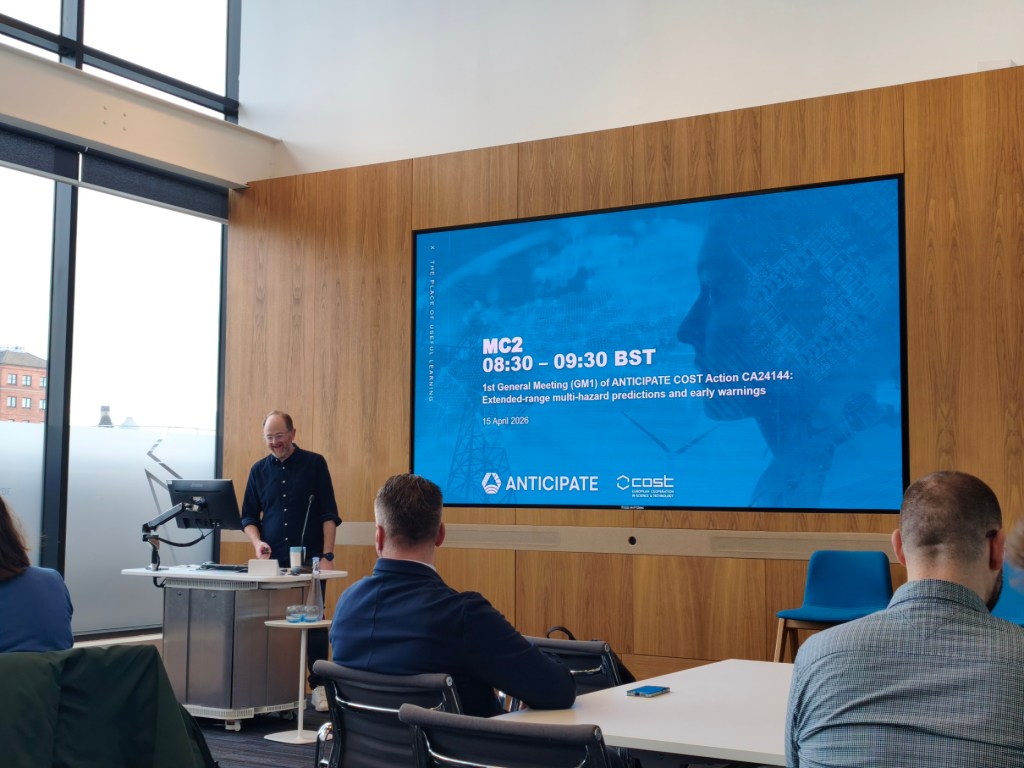
On 14-15 April 2026, the University of Strathclyde played host to a pivotal moment in meteorological and disaster-response cooperation: the 1st General Meeting of the COST Action CA24144, better known as ANTICIPATE.
The event brought together a multidisciplinary community of researchers and stakeholders to Glasgow’s Technology & Innovation Centre to address a critical challenge: how do we predict and prepare for multiple, interconnected hazards weeks before they strike?
The mission: beyond single hazards
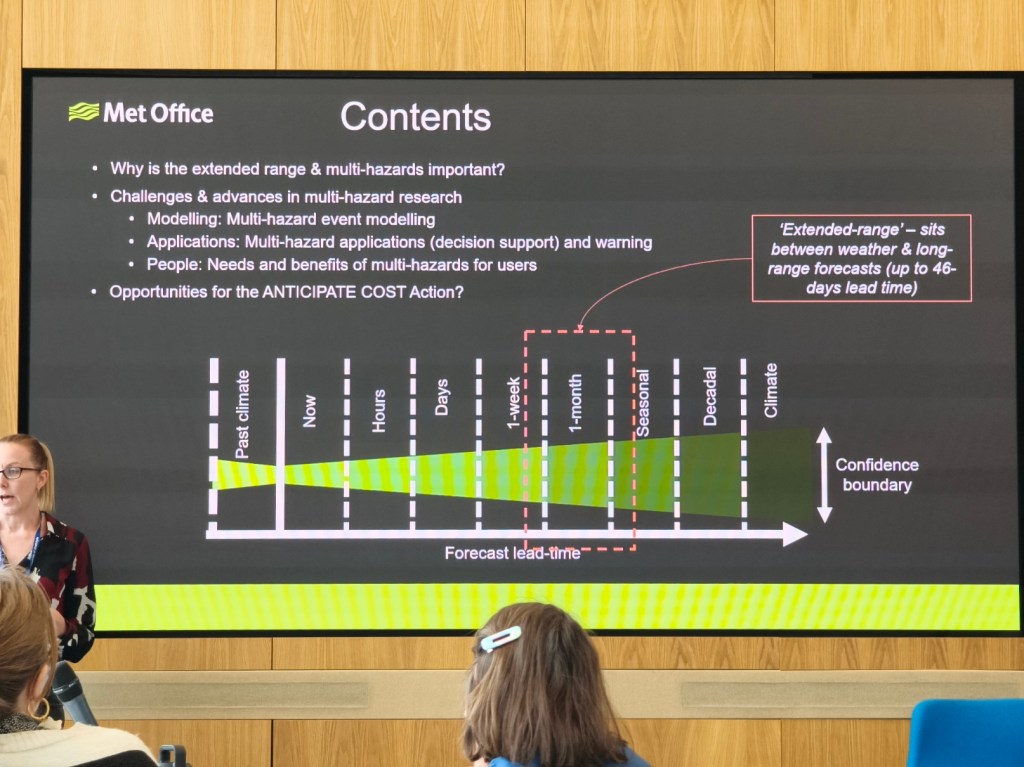
Currently, most weather warnings are limited to single events (like a heatwave) and short timeframes (up to 10 days). However, the real world is messy. Hazards often compound or cascade, such as a drought followed by wildfires or a storm leading to landslides. ANTICIPATE aims to revolutionize this landscape by extending the lead time, thanks to “extended-range” forecasts that look up to 46 days ahead. Furthermore, ANTICIPATE integrates disciplines by bridging the gap between the weather forecasting communicy and the disaster risk reduction section, ultimately creating a pan-European network to support the United Nations’ Early Warnings for All initiative.
Key highlights from the general meeting
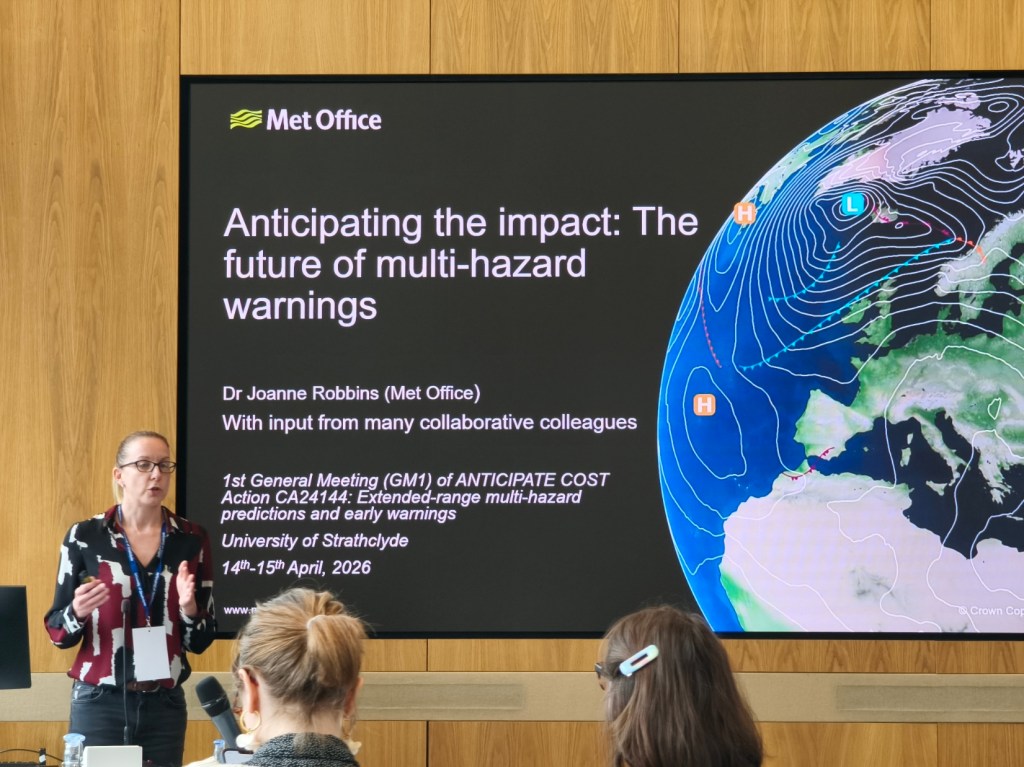
The meeting kicked off with a powerful keynote from Jenty Kirsch-Wood (UNDRR) on multi-risks and anticipatory action, setting a high bar for the discussions that followed. Over the 1.5-day hybrid event, participants engaged in breakout sessions to define the roadmap for the Action’s five Working Groups, focusing on (i) sources of multi-hazard predictability, (ii) linking multi-hazards with extended forecasts, (iii) multi-hazard impacts and databases, (iv) early warning products for action, and (v) co-design and stakeholder engagement.
Looking ahead: testbeds and AI
A major point of discussion was the use of representative “testbeds” across Europe—ranging from transboundary flooding in Central Europe to wildfires in the South—to demonstrate the effectiveness of new warning products. The Action will also explore cutting-edge AI/ML techniques to improve the accuracy of these complex, high-dimensional predictions.
As we move forward into this 4-year journey, the focus remains clear: training the next generation of forecasters and ensuring that no community is left unprepared for the challenges of a warming climate.
Want to learn more? Check out these resources:

