
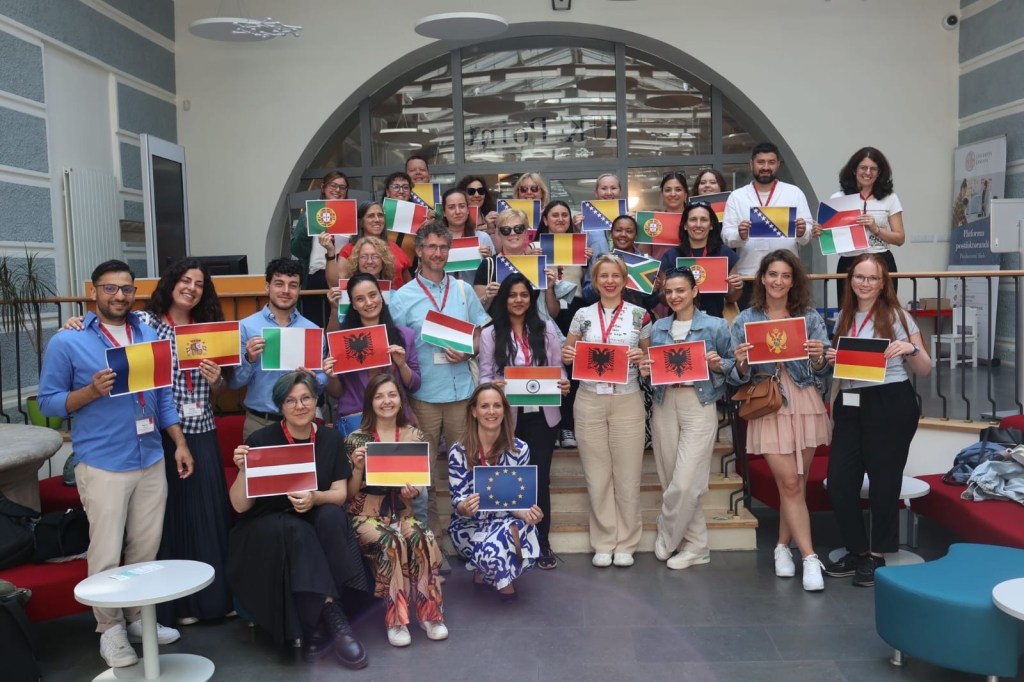
The term internationalisation has become a permanent fixture in the strategic rhetoric of European higher education. At a historic institution such as Charles University, the word is ubiquitous, appearing in every mission statement, grant application, and administrative address (read Charles University’s 2026-2030 strategic plan here). Yet, for those of us on the ground, the reality often feels less like a global melting pot and more like a local institution with a few colourful flags pinned to the map for effect. In a setting where the majority of academic staff are home-grown, most students are local, and the default language for everything from lab safety protocols to lunchroom gossip is Czech, what does internationalisation actually mean? To move beyond the buzzword, we must define it as a structural overhaul rather than a cosmetic upgrade. True internationalisation is not a hospitality project for visiting scholars; it is the fundamental integration of global standards into the very marrow of the university.
Dismantling the administrative glass wall
The most immediate barrier to a global campus is not scientific; it is stubbornly bureaucratic. We frequently recruit world-class researchers from across the globe, only to hand them a login for an internal management system that is available exclusively in Czech or rendered in broken English. This is the bureaucratic equivalent of a Kafka novel, where the protagonist is highly qualified but linguistically locked out of their own professional life. To be a truly international faculty, every touchpoint of the university experience must be bilingual. This is not a matter of convenience; it is a matter of professional respect and institutional efficiency. When a foreign researcher cannot navigate the administration independently, they are effectively infantilised, forced to depend on the goodwill of Czech-speaking colleagues to perform basic tasks like filing performance reports or understanding their own rights and duties.
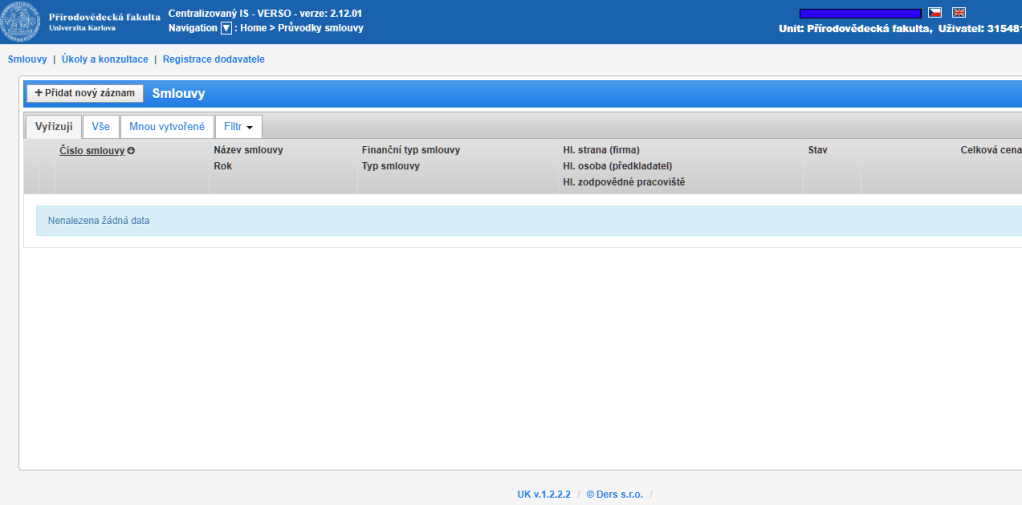
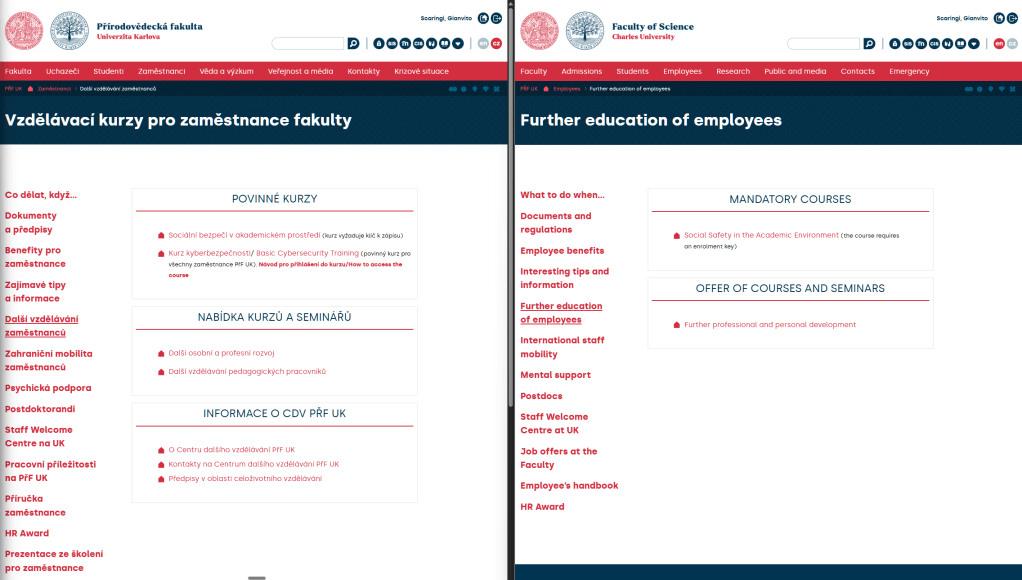
To be fair, the Faculty of Science has demonstrated a genuine willingness to evolve, often outperforming other faculties in its digital accessibility. We possess a functional English website that serves as a vital bridge for international staff, yet the flow of information remains somewhat asymmetrical. While the framework exists, the content is often thin; some newsletter items go untranslated, several information pages remain missing, and certain administrative forms are still stubbornly monolingual. This deficit is rarely due to a lack of character or intent. Many of our administrative colleagues are exceptionally kind people, genuinely willing to help. However, their professional efficacy is frequently hamstrung by language skills that remain insufficient for a top-tier global research environment. Until we invest in the linguistic training of our support staff, even the most well-meaning assistance will continue to be lost in translation.
A truly internationalised administration also demands dual-language governance, ensuring that rectors’ directives, faculty bylaws, and official announcements are released in both languages simultaneously and contain the same depth of information. Linguistic equity is essential to ensure international staff are treated as vital stakeholders rather than temporary or long-term guests. Until we dismantle this linguistic glass wall, our claim to being an international hub will remain hollow.
Governance, representation, and the end of academic inbreeding
Attracting a foreign postdoc is a modest success; ensuring that the same postdoc can eventually become a department head or a dean is the real litmus test of internationalisation. In many Central European institutions, there remains an unspoken ceiling for non-local staff. Because the language of governance—the Academic Senate, faculty boards, and strategic committees—traditionally remains Czech, we effectively disenfranchise our international colleagues from the decision-making process. There are, however, glimmers of progress. My own recent election as the first non-Czech speaker to join the faculty-level Senate (link) is a milestone that signifies a nascent openness to diverse voices. I am deeply grateful to the colleagues who supported my candidacy and the fellow senators who have facilitated my integration. With meetings now conducted primarily in English and documentation systematically translated, we are seeing a level of participation and transparency that was previously impossible.
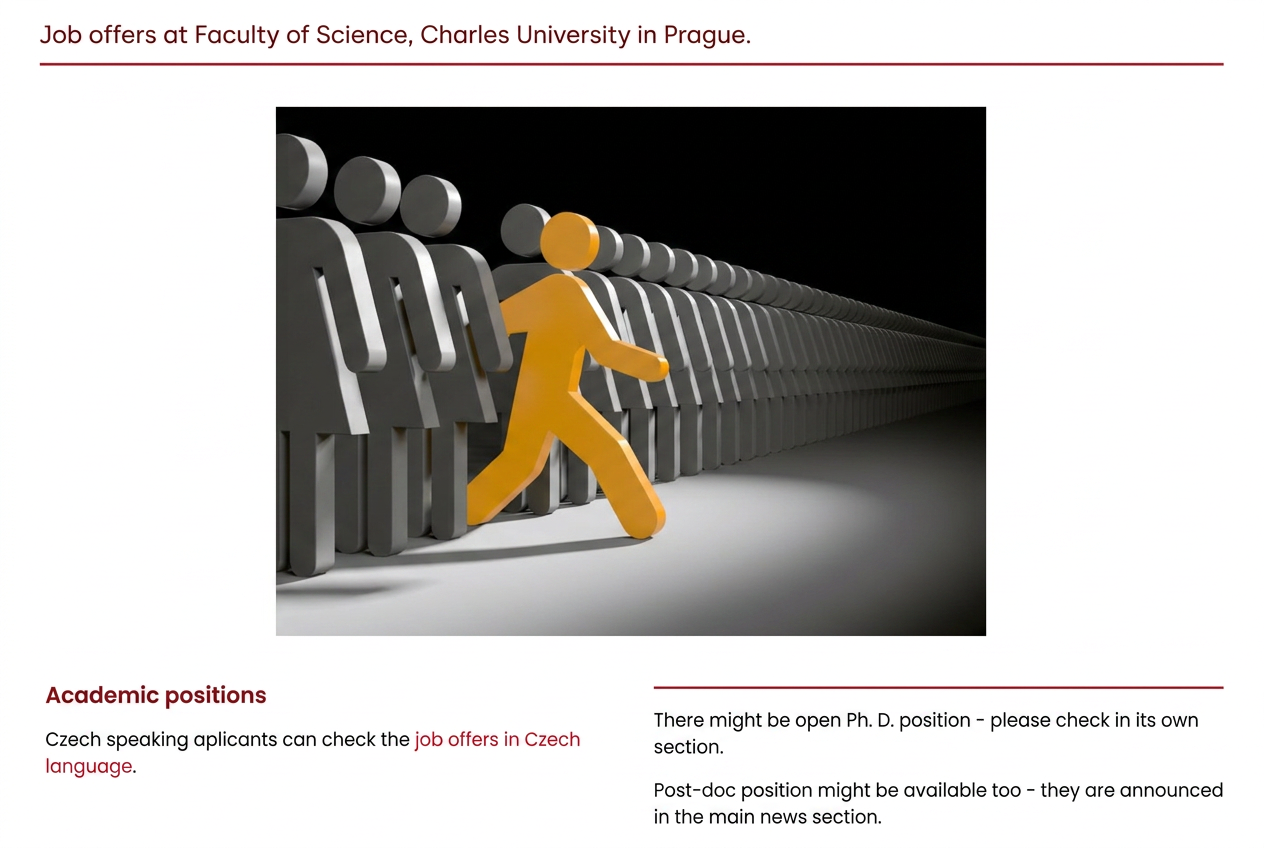
Yet, this progress also serves to highlight the scale of the remaining hurdles. Other structural barriers persist, such as the formal requirement of the Czech language for most leadership positions. As it stands, foreigners remain effectively barred from leading departments. If we signal that a researcher can contribute to our labs but is prevented from leading our institutions, we are maintaining a two-tier system. True excellence should not be held hostage by a linguistic technicality in the bylaws. This shift requires a greater, systematic effort to move us away from the tradition of academic inbreeding—the persistent habit of hiring our own graduates to fill faculty positions. While this creates a sense of continuity, it can lead to intellectual stagnation. We must embrace open, international searches for every faculty position and leadership post alike. When we hire the best person in the world for a job, rather than the most convenient person in Prague, we raise the collective standard. Equal opportunity must mean that a professor from India, Italy, or Iceland carries the same institutional weight as one from Bohemia.
Elevating research leadership and the integrated classroom
In the Faculty of Science, we are rightfully proud of our international collaborations. However, there is a distinct difference between being a junior partner in a global consortium and being the coordinator who leads it. Internationalisation means fostering an environment where our researchers are the primary drivers of high-impact global projects. This requires a shift in institutional ambition. We should be the primary destination for PhD candidates from every continent, not just because our location is picturesque, but because our research environment is indistinguishable from the top-tier institutes in London, Zurich, or Boston. To achieve this, we must prioritise high-impact, global publications and international patent filings over local recognition. Furthermore, as the administrative burden of leading Horizon Europe projects is considerable, we need specialised, English-proficient support staff who can help our researchers navigate the complexities of international leadership.
In undergraduate and graduate teaching, we often see a divide between Czech-taught programmes and their English counterparts—when the latter even exist. This creates a parallel-track system where international students live in a bubble, segregated from the local student body. A truly international faculty should aim for an integrated classroom where local and international students work side by side. While preserving the Czech language for science is a valid cultural mission, particularly in the context of secondary education and the local labour market, we must recognise that our students will work in a world where English is the global lingua franca. By establishing study programmes entirely taught in English, which include mandatory international mobility, we prepare our Czech students for global careers and enrich the experience for those coming from abroad.
Ultimately, internationalisation is not a box to be ticked for the sake of university rankings. It is a commitment to quality and excellence. By removing language barriers, opening our leadership structures, and demanding global research standards, we aren’t just making the university more foreign; we are making it better. For Charles University to maintain its status as a leading European institution, we must transition from being a national treasure to a global powerhouse. This evolution requires us to stop treating internationalisation as a secondary goal and start treating it as the primary standard for everything we do.

