
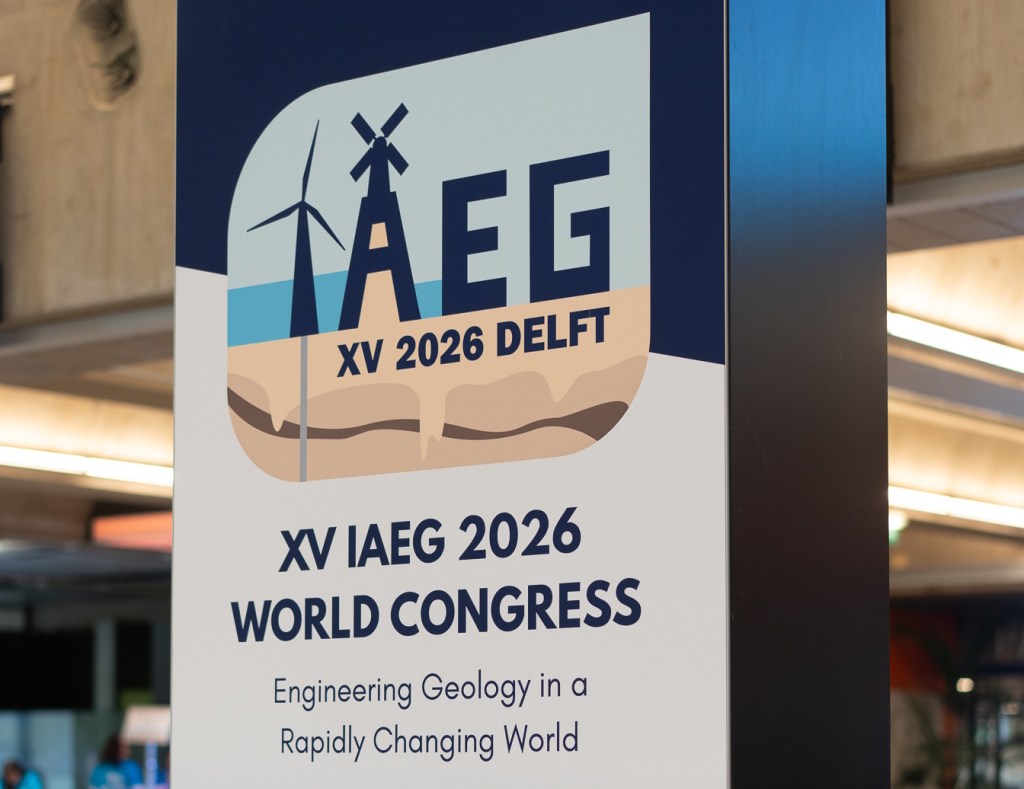
Walking through the halls of Delft University of Technology this week for the XV Congress of the International Association for Engineering Geology and the Environment (IAEG), one senses an atmosphere that goes well beyond the usual periodic reunion of colleagues. Hosted under the banner Engineering Geology in a Rapidly Changing World, this congress arrives at a defining moment for our community. Few locations could offer a more fitting backdrop than Delft, a city built on soft deltaic soils where human survival and prosperity have depended for centuries on understanding water, subsidence, and the fragile equilibrium of the subsurface.
As presentations, commission meetings, and corridor debates unfold, a shared realisation is taking hold. We are living through a period of profound environmental, technological, and geopolitical turbulence. The XV IAEG Congress is not merely an occasion to showcase recent case studies; it is a turning point at which our discipline must take stock of its identity and move forward with determination.
Reclaiming Our Role Across Profession and Academia
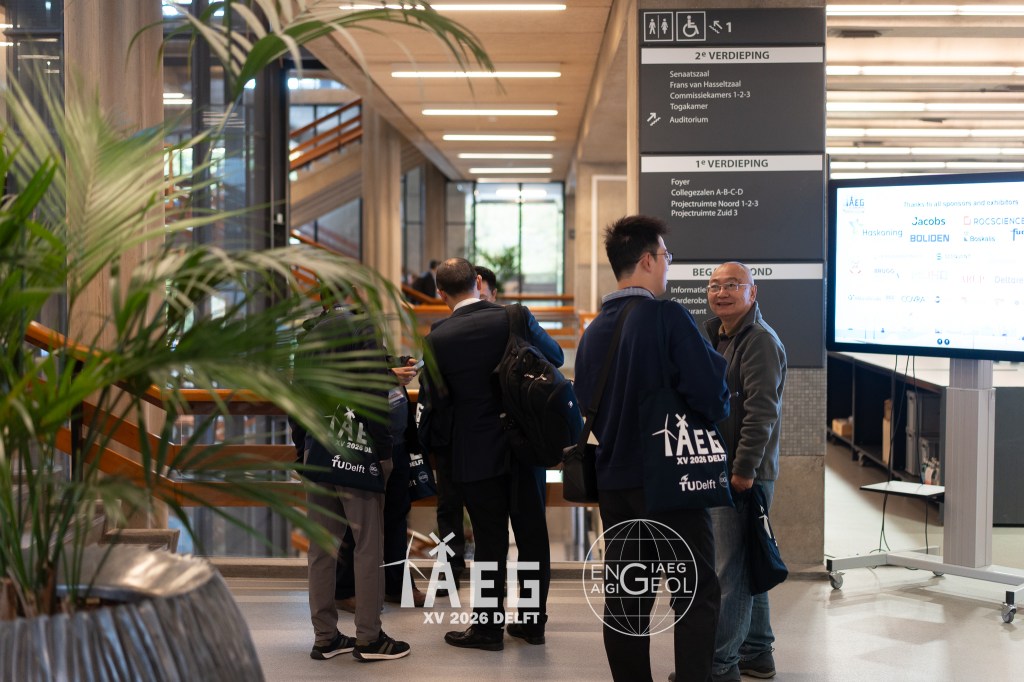
For decades, engineering geologists in both industry practice and academia have navigated an uneasy frontier between the Earth sciences and civil engineering. In professional consultancy, budget pressures and fragmented project workflows frequently push engineering geology toward the margins, reducing complex geological histories into simplified tabular parameters for geotechnical design software. When the geological narrative is stripped away, ground models lose their predictive power, and unforeseen ground conditions can lead to costly failures or disasters.
In academia, a parallel tension persists. University restructuring and metric-driven funding frameworks often force engineering geology groups to justify their existence either to traditional earth science faculties that prioritise pure science over applied problems, or to engineering departments that favour numerical abstraction over field observation. Yet the challenges highlighted here in Delft demonstrate that neither pure geology nor pure mechanics can stand alone. Our core strength lies precisely in reading the evolution of the ground across spatial and temporal scales and translating that understanding into rigorous, quantitative engineering solutions. As infrastructure ages and climate extremes intensify, engineering geologists must step out of a purely advisory role and claim a central seat in project conception, risk governance, and academic leadership.
Navigating the “AI Fever” Without Losing Physical Grounding
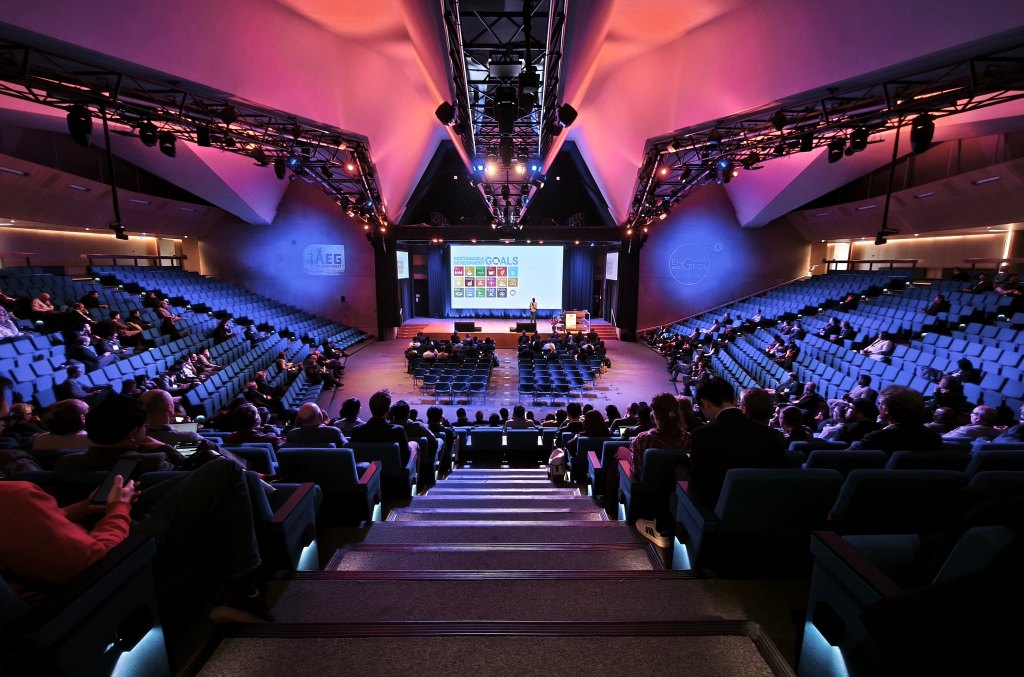
Nowhere is the tension between abstraction and reality more visible at this congress than in sessions dedicated to the digital transition. We are indeed experiencing an unmistakable artificial intelligence fever. Machine learning algorithms, computer vision, and data-driven assessments are proliferating at light speed. Used wisely, these tools offer extraordinary capabilities for synthesising vast datasets and real-time sensor networks. However, the enthusiasm for algorithmic shortcuts carries serious risks that our community must confront candidly. Black-box models trained on incomplete or biased datasets cannot predict system behaviour when boundary conditions shift outside historical norms. In journal peer review and university classrooms alike, we increasingly encounter manuscripts and projects where sophisticated neural networks mask a lack of physical plausibility or data quality control. A statistically high validation score means little if a model violates conservation laws or ignores physical processes governing soil or rock mass behaviours. Moving forward, engineering geologists must lead the charge toward explainable, physics-informed digital tools where artificial intelligence augments field judgment, experimental rigour, and geological reasoning rather than replacing them.
Geopolitics, Resource Scarcity, and the Imperative of Multidisciplinarity
Our technical debates in Delft also take place against a fractured geopolitical landscape. Engineering geology can no longer view itself as an apolitical technical service insulated from global affairs. The accelerating energy transition requires unprecedented utilisation of the subsurface, from deep geothermal systems and underground hydrogen or carbon dioxide storage to nuclear waste repositories and offshore wind foundations. At the same time, strategic competition over critical raw materials, water security, and resilient transport corridors places engineering geologists directly at the intersection of resource geopolitics and environmental stewardship.
Meanwhile, climate change is driving cascading multi-hazards that respect neither national borders nor disciplinary silos. When an extreme rainfall event triggers landslides that sever critical supply chains or displace vulnerable communities, purely technical fixes fall short. Addressing these compounded crises requires genuine multidisciplinarity in both daily practice and scientific research. We must collaborate fluently not only with geotechnical engineers, hydrologists, data scientists, but also with climate modellers, urban planners, sociologists, and policymakers. Bridging the gap between physical hazard modelling and community resilience is no longer optional.
Overhauling Teaching Programmes and Engineering Regulations
If our discipline is to meet these demands, two pillars require reform: how we educate the next generation and how we codify engineering practice.
First, university teaching programmes must evolve. Many degree structures still reflect twentieth-century disciplinary boundaries, separating traditional geological mapping from advanced continuum mechanics, remote sensing and data science, and sustainability policy. Updating our curricula means equipping students with a solid grounding in soil and rock mechanics alongside systems thinking, digital literacy, and research integrity. Students need to learn not just how to run a commercial solver or train an algorithm, but how to question input data, spot fabricated or implausible results, and understand the socio-environmental footprint of ground engineering.
Second, engineering regulations and design standards must be brought into the twenty-first century. For instance, most existing geotechnical and civil engineering codes remain anchored in the assumption of a stationary climate. They struggle to accommodate unprecedented hydro-meteorological forcing and the explicit quantification of uncertainties. Reforming regulatory frameworks across the globe requires sustained advocacy from the IAEG, its technical committees, and national groups.
Renewal at the Helm: Diversity, Inclusion, and the 2027-2030 Executive Committee
A discipline capable of transforming its external impact must first reform its own institutions. An encouraging milestone of the Delft congress is the commitment to gender balance and global inclusivity within IAEG governance. During the council meetings here in Delft, the new Executive Committee for the next four-year term was officially elected. Ann Williams of New Zealand, chair of the Women in Engineering Geology (WEG) Committee and recipient of the Glossop Medal, has been elected President, leading a geographically diverse team.
And it’s worth noting that IAEG’s most prestigious award, the Hans Cloos Medal, was awarded this year to Atiye Tuğrul of Türkiye, that Xuanmei Fan delivered the first keynote lecture, and that the congress is being chaired by Dominique Ngan-Tillard. Four women, four outstanding professionals.
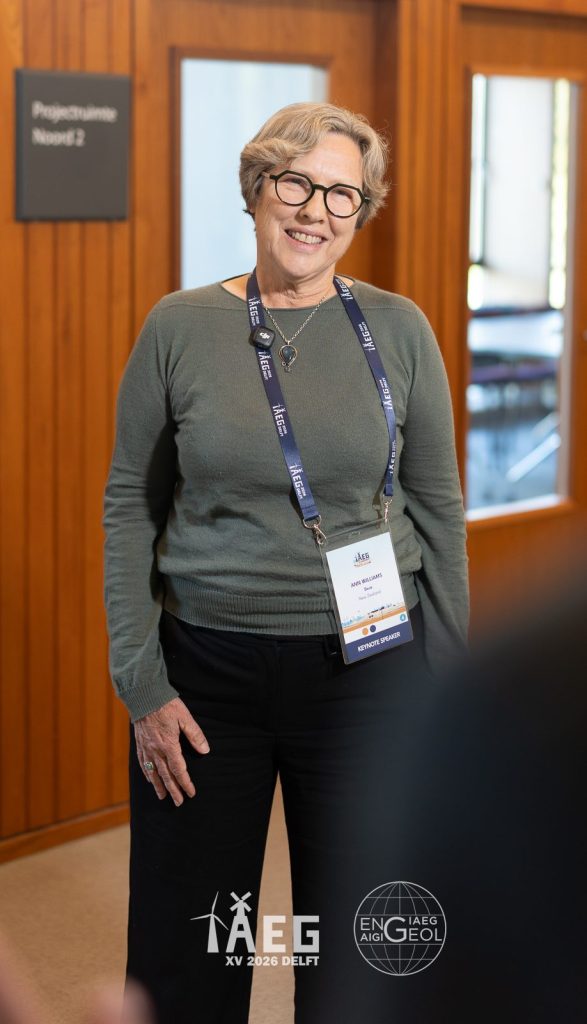
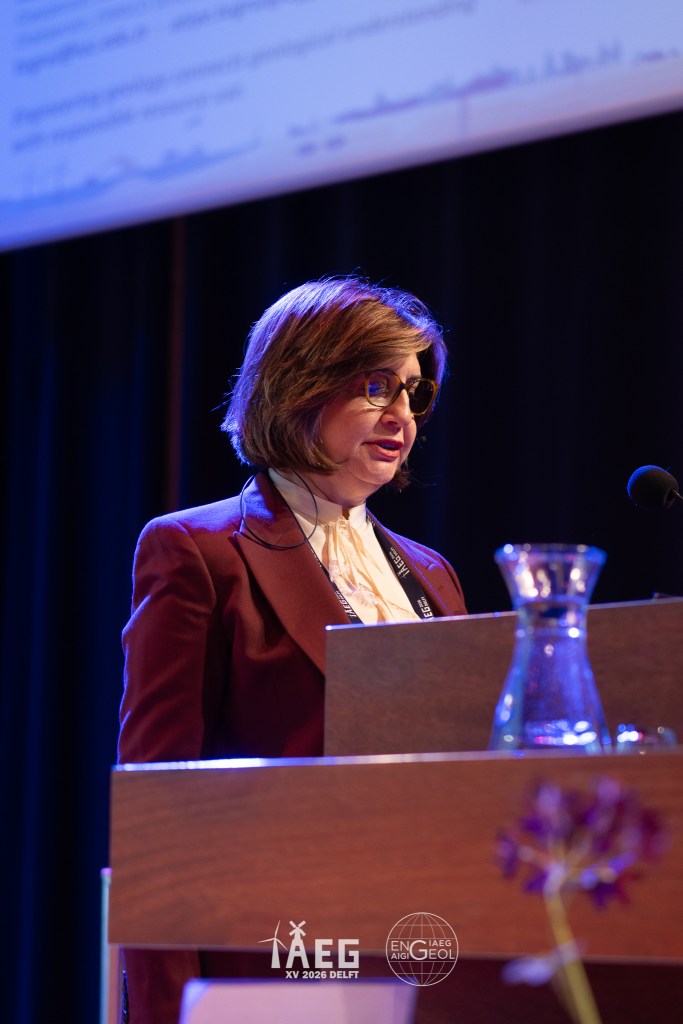
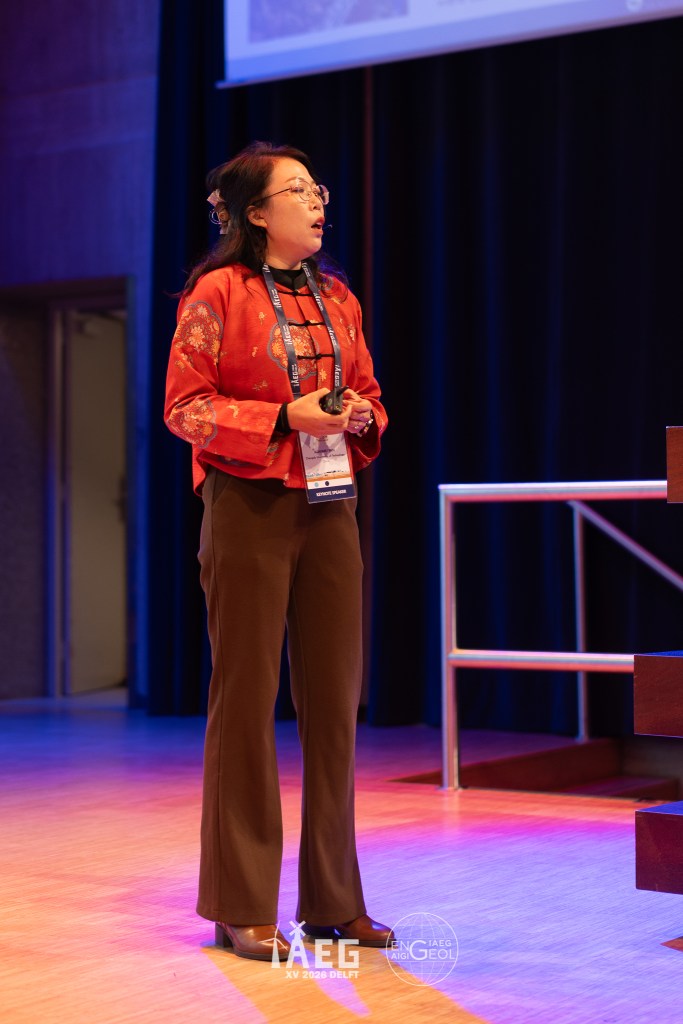
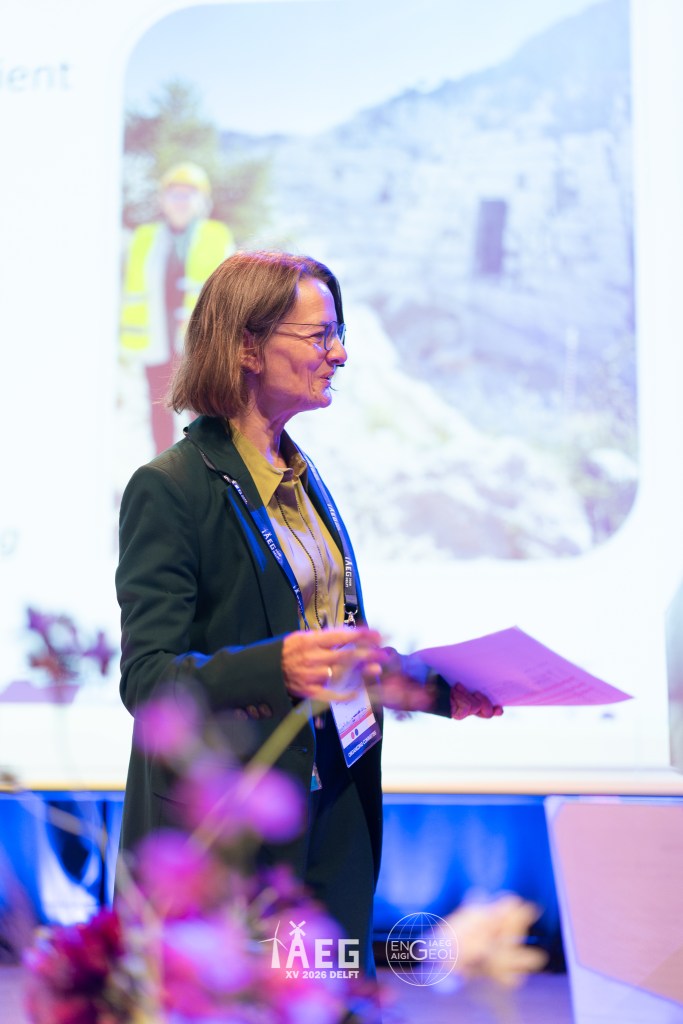
But beyond the individual appointments, the association’s structural evolution deserves recognition. The IAEG is actively empowering early-career professionals by recognising the critical role of the Young Engineering Geologists (YEG). Equally significant is the growing institutional commitment to women in our profession, as the dedicated Vice-President position representing WEG is set to be formalised. Together with dedicated Diversity, Equity, and Inclusion initiatives, these changes signal that the IAEG is serious about building a community that reflects the full talent and diversity of the societies we serve.
Moving Forward with Determination
As the sessions in Delft continue over the coming days, the message emerging from the XV IAEG Congress is unmistakable. Engineering geology stands at a decisive juncture. We cannot afford nostalgia for a simpler era, nor can we surrender our physical and geological intuition to uncritical technological hype. By modernising education, pushing for regulatory updates, embracing authentic multidisciplinarity, and empowering a diverse generation of leaders, our community has everything it needs to shape a safer and more sustainable world. The conversations started here in the Netherlands must now translate into decisive action in our universities, professional associations, and project sites worldwide.

